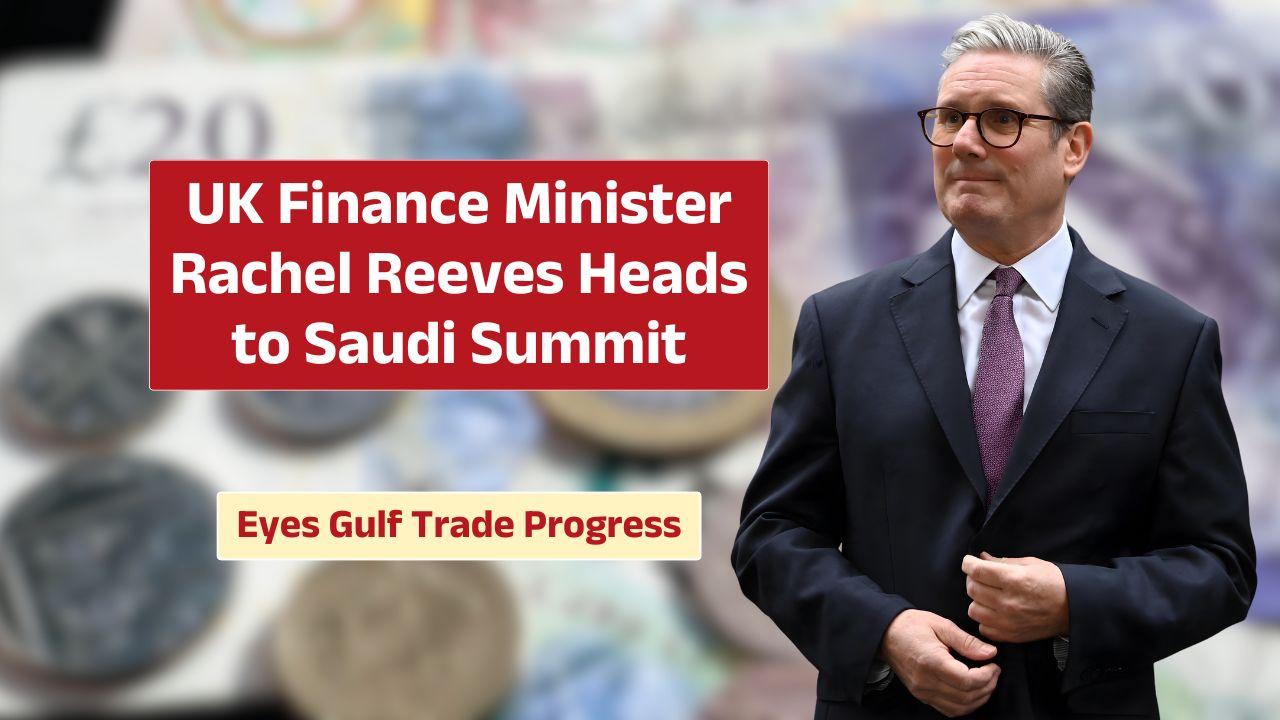
Britain is taking another step towards deepening ties with the Gulf as Finance Minister Rachel Reeves prepares for a high-profile visit to Saudi Arabia. Scheduled for Monday, this marks the first trip by a British finance minister to the region in six years.
Her visit isn’t just symbolic—it’s tied to major economic ambitions, both in terms of attracting investment and progressing long-standing trade negotiations with the Gulf Cooperation Council (GCC).
Summit
The main event on Reeves’ itinerary is an investment summit hosted in Riyadh. This flagship gathering draws global political leaders, top executives, and major investors under one roof. For Reeves, this is a golden opportunity to pitch the UK as a top-tier destination for Gulf capital, especially in the wake of Brexit as the country continues to redefine its global economic partnerships.
During her stay, Reeves is expected to meet with senior Saudi royals and key players from the business world. Interestingly, members of Donald Trump’s administration will also be present, adding another layer of high-level networking and political discourse.
Investment
Saudi Arabia has already made significant financial moves into the UK. Just last year, the Saudi Public Investment Fund (PIF) snapped up a 15% stake in Heathrow Airport. This was bought from Ferrovial, a Spanish construction group, underlining how strategic and long-term the Saudis view British infrastructure.

With Reeves’ visit, there’s growing speculation that more Saudi-led investments into the UK may be announced soon. This might include additional transport infrastructure, tech partnerships, or real estate deals—areas where Gulf investors traditionally show strong interest.
On the aviation front, Riyadh Air—Saudi Arabia’s newly launched state-owned airline—plans to make its inaugural flight to Heathrow. That’s no coincidence. The airline ordered 25 Airbus A350s in June, with several components manufactured in Britain. This shows how closely tied these economic interests already are, even before a trade deal is formally signed.
Trade
Beyond investment, Reeves’ trip has a broader goal: advancing the UK’s trade negotiations with the GCC. The Gulf Cooperation Council includes Saudi Arabia, Bahrain, Kuwait, Qatar, Oman, and the UAE. Ever since leaving the EU in 2020, the UK has been actively working on trade deals worldwide, and the GCC has been a major target.
Reeves is scheduled to meet with her counterparts from Bahrain, Kuwait, and Qatar to push this conversation forward. While there’s mutual interest, both sides also acknowledge challenges—particularly on cultural values, labor rights, and governance standards.
Officials say Reeves will take an open but honest approach—committing to constructive dialogue while also recognizing the differences that could make negotiations complex.

Progress
Despite the difficulties, talks are reportedly at an “advanced stage.” Trade Minister Chris Bryant shared earlier this month that a deal might not be far off, even as some UK trade unions express concern over human rights conditions in the Gulf.
If finalized, the economic boost could be tangible. According to the British finance ministry, a successful trade deal with the GCC could add 1.6 billion pounds ($2.2 billion) annually to the UK economy. That may sound small in percentage terms—just about 0.06% of GDP—but in real money, that’s a meaningful lift, especially in today’s tight economic climate.
Strategy
Reeves’ visit is part of a larger Labour government push to reposition Britain on the world stage. Prime Minister Keir Starmer already visited Saudi Arabia and the UAE last year, sending clear signals that Labour sees the Gulf not just as a source of capital, but as a strategic partner for trade, energy, and diplomacy.
And let’s not forget timing. With global tensions rising and economic uncertainty looming, securing strong allies and deep trade partnerships in resource-rich and capital-heavy regions like the Gulf could offer the UK some much-needed stability.
Outlook
This visit is more than just diplomatic showboating. It’s a carefully calculated step by the UK to reassert itself in the post-Brexit global economy. By securing both investments and a long-awaited trade deal with the GCC, Reeves could help deliver a crucial win for the UK’s economic future.
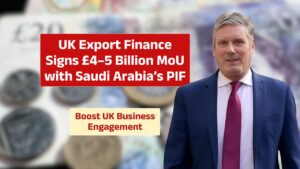
If successful, the trip could mark a shift in how Britain engages with the Gulf—not just as an investor, but as a true partner. And with the world watching, this might just be the moment the UK cements its next major economic chapter.
FAQs
Why is Rachel Reeves visiting Saudi Arabia?
To attend an investment summit and hold trade talks with Gulf nations.
Which countries are part of the GCC?
Saudi Arabia, UAE, Qatar, Bahrain, Kuwait, and Oman.
What investment has Saudi Arabia made in the UK?
PIF bought a 15% stake in Heathrow Airport last year.
What is Riyadh Air’s first flight route?
Its first flight is scheduled to go to London’s Heathrow Airport.
How much could the GCC deal add to UK GDP?
About £1.6 billion annually, or 0.06% of GDP.