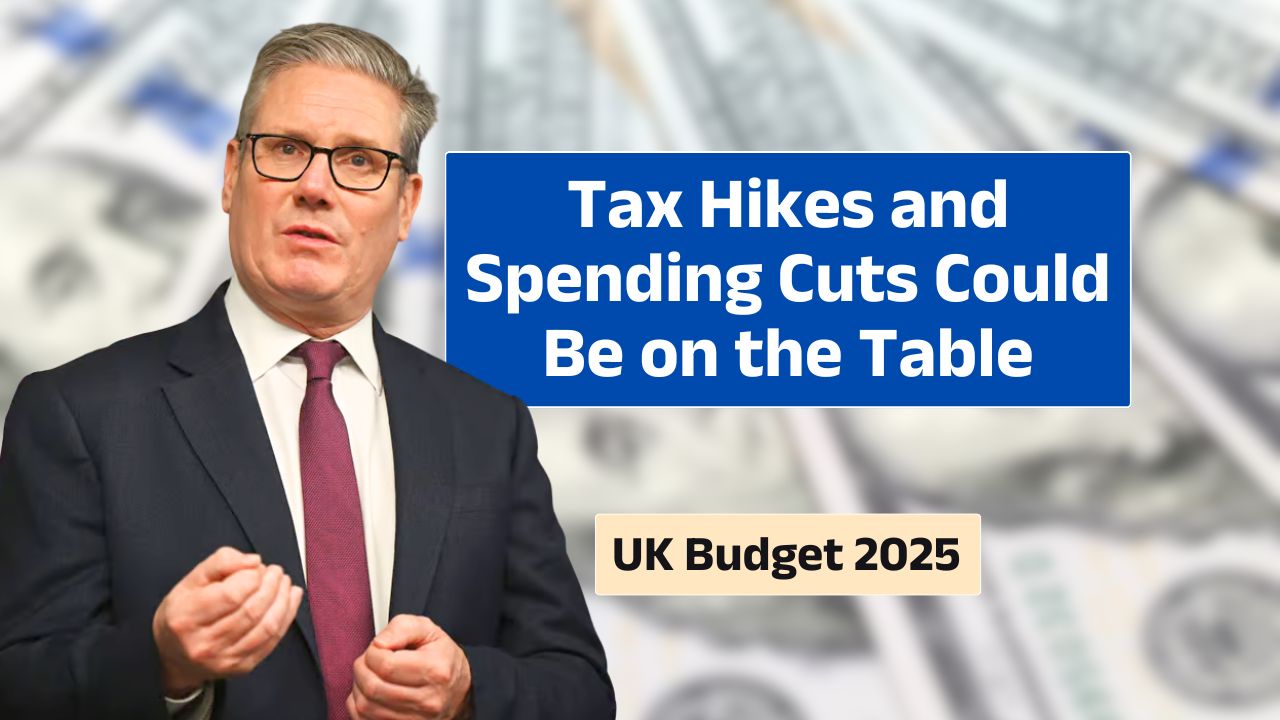
Tax hikes and spending cuts could soon be a reality in the UK as Chancellor Rachel Reeves signals that difficult fiscal decisions are ahead. With the Autumn Budget scheduled for November 26, Reeves has hinted that her team is weighing up options to close a potential £50 billion shortfall.
This means the Labour government may have to break away from earlier promises not to raise taxes on working people—something that could stir strong reactions across the political landscape.
Pressure
During a recent interview with Sky News, Reeves made it clear that nothing is off the table when it comes to balancing the books. While she insists she won’t abandon her “iron-clad” fiscal rules—mainly that everyday government spending must be covered by tax income, not borrowing—she admitted that tough choices lie ahead.
These rules are designed to maintain financial discipline and calm market jitters, especially after years of volatility. But with the UK’s fiscal hole estimated to be around £50 billion, Reeves now faces a tough decision: bend her own principles, or face the backlash from tax hikes and budget cuts.
Promises
Labour’s 2024 election manifesto had made clear commitments. Reeves promised not to raise taxes that would directly hit workers—specifically National Insurance, income tax thresholds, and VAT. These were seen as core pledges designed to reassure voters that Labour wouldn’t dig deeper into their pockets.

The party also stated that businesses wouldn’t face another tax hike, especially after last year’s Autumn Budget which saw them take on £40 billion in new tax burdens. That commitment now looks shaky, considering the size of the fiscal gap Reeves must fill.
Backlash
Spending cuts won’t be easy either. Earlier this year, the government attempted to trim welfare spending—a move that quickly backfired. Labour MPs pushed back hard against cuts to social security and benefits, forcing Reeves and Prime Minister Keir Starmer to backtrack.
These failed attempts have only made it more difficult to find room for savings. Cutting vital public services or welfare would be unpopular with the public and damaging politically. Yet, with limited alternatives, both Reeves and Starmer are subtly preparing the public for some level of financial pain ahead.
Growth
Another major concern is how tax increases could impact the economy. The UK is not exactly thriving—economic growth is still sluggish. According to the latest forecast from the International Monetary Fund, the UK is expected to grow by just 1.3% in both 2025 and 2026. While that’s an upgrade from previous estimates, it’s still far from robust.
Raising taxes now could drag growth down even further, something that could weaken the government’s economic credibility just as it’s trying to rebuild trust. At the same time, cutting spending could also slow down recovery, especially if public investment is reduced.

Options
So, where does that leave Reeves? She’s got three main paths forward:
- Break her fiscal rules – which might shake market confidence.
- Raise taxes – breaking manifesto pledges and angering voters.
- Cut spending – risking public services and support from within her party.
Each route has political and economic risks. But the budget black hole is real, and time is running out. Reeves says she’s committed to “making the numbers add up,” which means tough decisions are inevitable—whether the public likes it or not.
Signals
While neither Reeves nor Starmer has explicitly confirmed that tax hikes or cuts are guaranteed, the messaging from both has been increasingly clear. Starmer told the Labour conference that renewal would come at a price, saying the path forward “requires decisions that are not cost-free or easy.”
Reeves echoed that sentiment, warning party members that the months ahead will involve hard choices made tougher by global pressures—from inflation to geopolitical instability.
These statements may be subtle, but they’re designed to prepare both voters and lawmakers for what’s to come in the Autumn Budget.

Timing
The Autumn Budget on November 26 will be a major test for Labour’s economic credibility. Expectations are high, and the fiscal hole cannot be ignored any longer. Whether Reeves opts for new levies, expenditure cuts, or a mix of both, the decisions made will shape the UK economy—and the political landscape—for years to come.
The public has been warned, and the groundwork is being laid. Now all eyes are on Rachel Reeves as she prepares to make the toughest budget calls of her career.
FAQs
Will taxes go up in the UK in 2025?
Possibly. The Chancellor hinted at potential tax hikes.
Is Labour breaking its tax pledge?
It’s being reconsidered due to a £50 billion shortfall.
When is the Autumn Budget 2025?
It’s scheduled for November 26, 2025.
What are Labour’s fiscal rules?
Day-to-day spending must be funded by tax, not borrowing.
How will spending cuts affect services?
They could impact welfare and public sector funding.