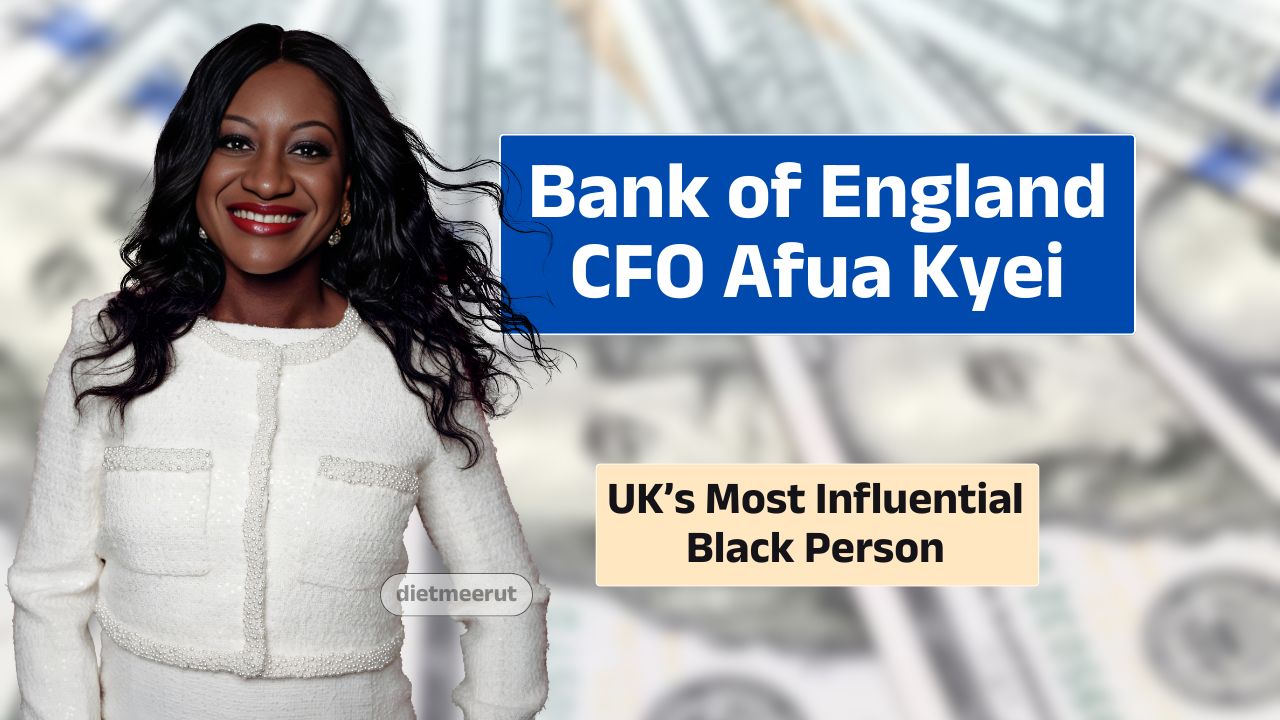
Afua Kyei, the Chief Financial Officer of the Bank of England, has been named the UK’s most influential Black person for 2026. This recognition came through the annual Powerlist, unveiled on 23 October. The list, curated by Michael Eboda and published by Powerful Media, celebrates individuals of African, African Caribbean, and African American heritage who are making waves across UK industries.
Kyei’s role at one of the UK’s most powerful financial institutions is not just a personal triumph—it’s a milestone for representation and leadership. But it also raises bigger questions about how organisations support Black women in leadership, and whether such recognition translates into real systemic change.
Visibility
While Kyei’s presence in a senior role is important, experts argue that visibility isn’t enough. Shereen Daniels, managing director of anti-racism consultancy HR Rewired, says that celebrating a handful of Black leaders can create a false sense of progress.
Daniels puts it bluntly—visibility without authority is not progress. It’s not just about getting a seat at the table, but having the power to make decisions, control budgets, and challenge systems without fear of backlash. It’s the difference between symbolic representation and structural inclusion.
Authority
The crux of the problem is that many Black women, especially in leadership roles, are expected to carry the burden of diversity without being granted real authority. They might be asked to lead DEI initiatives, sit on inclusion committees, or serve as the face of change—but often without the resources, safety, or mandate to effect real transformation.

Daniels highlights this contradiction especially within HR. As the very function that should model equity, HR often mirrors the same structural exclusions it is supposed to dismantle. Black women in HR, despite holding senior titles, frequently lack the organisational backing to shift power dynamics.
Pipeline
One of the most common excuses offered when challenged on lack of diversity is the so-called pipeline problem. But Daniels challenges this too, stating that the pipeline itself is often designed in a way that blocks Black women from advancing.
These women are sometimes positioned as leaders but denied the budget, mentorship, or backing to truly lead. It’s like being handed the keys to a car but not being given any fuel. They’re held to high expectations without the conditions necessary to succeed—and then blamed when progress stalls.
Bias
Aggie Yemurai Mutuma, CEO of Mahogany Inclusion Partners, points to another common challenge: the “prove-it-again” bias. Black women, she says, are often required to repeatedly validate their competence in ways that others are not. Their achievements are questioned, scrutinised, or minimized—leading to additional emotional labour and professional risk.
Mutuma also stresses that many workplaces still lack psychological safety. That means Black women can’t always show up authentically or challenge the status quo without worrying about how it might affect their career. The fear of being labeled “difficult” or “aggressive” is very real—and it silences voices that organisations desperately need to hear.

Action
So, what should companies actually be doing to support Black women in leadership? For Madeline McQueen, a leadership coach and speaker, the answer starts with accountability and measurable action.
She recommends making ethnicity pay gap reporting mandatory and linking executive bonuses to inclusion outcomes. If leaders are only rewarded for business growth but not for driving equity, inclusion becomes a side project instead of a core priority.
McQueen also advocates for targeted recruitment, especially where under-representation is persistent. In addition, she calls for measurable sponsorship programmes and quarterly reporting on progression data by ethnicity and gender. This transparency can expose where systems are failing—and where they’re beginning to work.
Change
What’s clear is that one person’s recognition—no matter how impressive—can’t be the end of the story. Afua Kyei’s achievement is a powerful symbol of what’s possible, but systemic change requires more than a spotlight. It demands long-term strategies, honest data, and leadership accountability.
Organisations must stop treating diversity as a box-ticking exercise. They need to start designing their systems for inclusion from the ground up, ensuring that Black women aren’t just seen—but empowered, respected, and heard. Anything less is just lip service.

FAQs
Who is Afua Kyei?
She is the CFO of the Bank of England and was named UK’s top Black leader.
What is the Powerlist?
An annual list recognizing influential Black individuals in the UK.
Why is visibility not enough for Black leaders?
Because they need real power, not just recognition, to make change.
What is the ‘prove-it-again’ bias?
A bias where Black women must repeatedly prove their skills.
How can firms support Black women leaders?
By offering real authority, sponsorship, and transparent reporting.