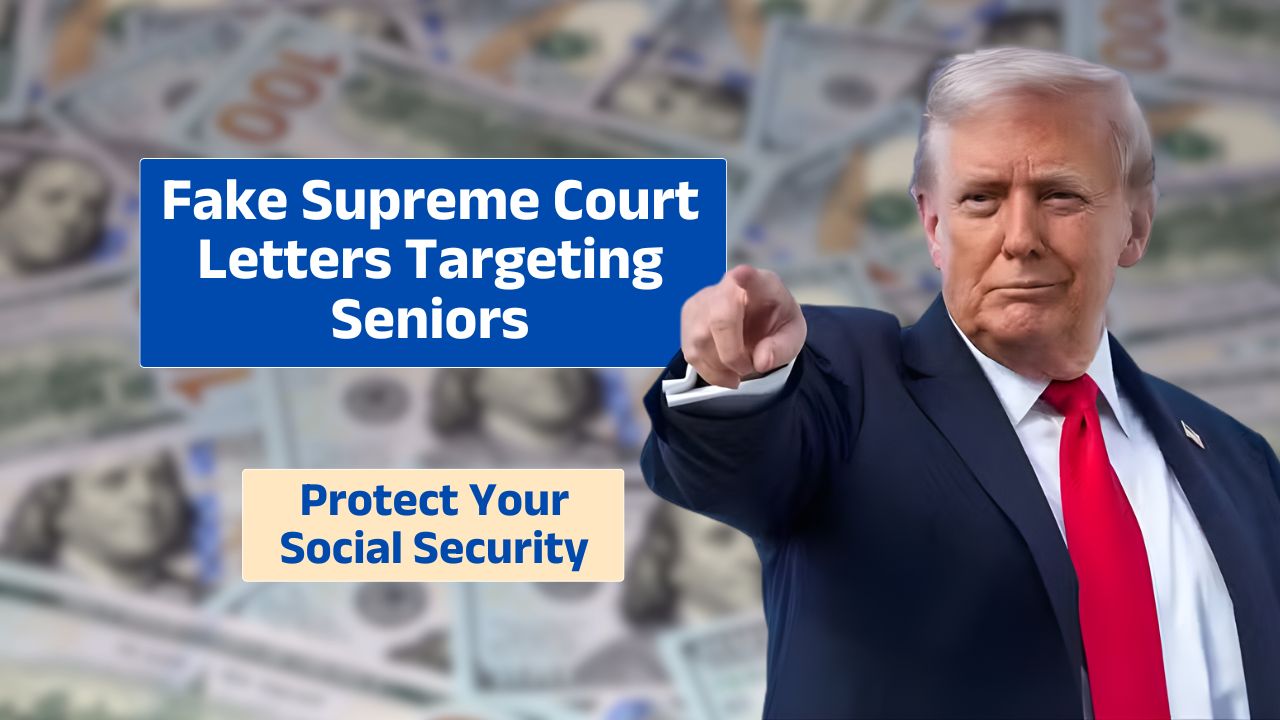
Social Security scams are sadly nothing new—but a recent one has officials sounding the alarm, especially for seniors. The Office of the Inspector General (OIG) has issued a fresh warning about a disturbing scam sweeping across the country, where fake Supreme Court letters are being used to steal from Social Security recipients.
With over 70 million people depending on Social Security for income, scammers are zeroing in on those most vulnerable—older Americans. And this new scheme is especially dangerous because it looks incredibly official.
Let’s break down how the scam works, what to watch out for, and how to stay safe.
Scam
Here’s the short version: people are getting letters that look like they’re from the Supreme Court of the United States. These fake letters come printed on what seems like official letterhead and sometimes even include the names and forged signatures of real justices.
The content of the letter usually says something terrifying—like your Social Security number has been compromised, your assets are about to be frozen, or you’re under investigation.

And then comes the catch: to avoid losing your benefits or going to jail, you’re told to cooperate immediately. For many seniors, the threat is enough to trigger fear and fast action.
Target
This scam is especially harmful because it specifically targets seniors—people who may not be as familiar with modern digital scams or who may feel intimidated by anything that looks legal or official.
Scammers know this and exploit it by layering the scam. After the fake letter, victims often receive:
- A text message, pretending to be from the Social Security Administration.
- A phone call “confirming” the letter and asking you to act fast.
- A follow-up request to send money, give up personal information, or visit a fake website that looks like an SSA portal.
And just like that, people are tricked into handing over their Social Security payments—or worse, their entire identity.
Process
According to experts like John Haraburda, a robocall and fraud detection specialist, the scam is surprisingly well-coordinated.
Scammers might first text you from a specific number, saying a Social Security agent will call you soon. That way, when the call comes in, you’re already expecting it and are more likely to believe it’s legitimate.
Once they’ve got your trust, they’ll push you to:
- Click on a shady link to a fake SSA site.
- Share your login info.
- Send money via wire transfer, gift cards, or cryptocurrency.
These are all massive red flags.
Protection
The OIG has provided some straightforward advice for protecting yourself—and it starts with recognizing the red flags.
Here are the most common warning signs:

| Red Flag | Why It’s Suspicious |
|---|---|
| Threats of arrest or legal action | Government agencies don’t operate this way |
| Claims your SSN is suspended | Social Security numbers are not “paused” |
| Demands for quick payment | Especially in gift cards or crypto |
| Requests to act without telling anyone | Scammers want to isolate victims |
| Letters from the Supreme Court | The Court does not contact citizens this way |
So, what should you do if you receive one of these letters or calls?
- Do not respond to the letter, text, or call.
- Do not click any links or go to any sites mentioned.
- Do not send money in any form.
- Report the scam directly to the OIG or via the SSA’s official site.
- Talk to someone you trust, like a family member or advisor.
Reality
Let’s clear this up: the Supreme Court is not sending letters about Social Security fraud. They don’t investigate identity theft, freeze assets, or hand out new Social Security numbers.
If someone tells you otherwise—especially with a scary-looking document—they’re trying to trick you.
This scam plays on fear and confusion, and sadly, it’s working. But you can stop it in its tracks by staying calm, staying skeptical, and talking to someone before you act.
If you’re ever unsure about a call or letter claiming to be from the government, don’t engage. Go directly to the official website or call the SSA at their verified number. Your benefits, identity, and peace of mind are worth protecting.
FAQs
Is the Supreme Court contacting seniors?
No, the Court does not send letters about Social Security issues.
What if my letter looks official?
Even official-looking letters can be fake—verify independently.
Should I call the number in the letter?
No, always contact SSA directly through their official number.
What payment methods do scammers use?
They often ask for gift cards, crypto, or wire transfers.
Can my SSN be suspended?
No, Social Security numbers do not get suspended.