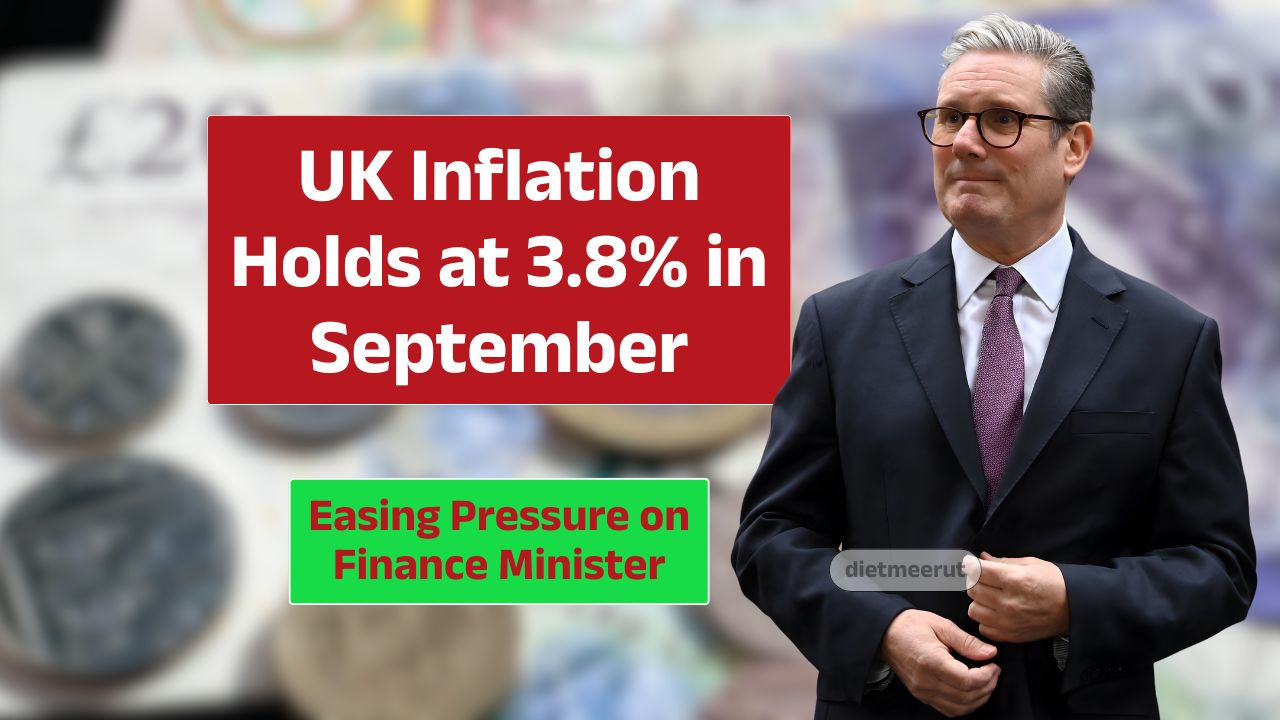
Inflation in the UK unexpectedly remained flat at 3.8% in September, according to fresh data from the Office for National Statistics. The figures bring some welcome breathing room for Finance Minister Rachel Reeves, just weeks ahead of her anticipated budget announcement in November.
Most economists, along with the Bank of England, had expected inflation to rise to around 4.0%. However, both overall inflation and the services sector rate stayed steady, breaking from predictions and offering a mild surprise in a turbulent economic landscape.
Table of Contents
Reaction
The market reaction was immediate. The British pound slipped against the U.S. dollar as investors processed the lower-than-expected inflation number. Currency traders had priced in a possible uptick in inflation, which could have pushed the Bank of England toward keeping interest rates higher for longer.
Instead, the stable reading gave the Bank some flexibility, especially as signs of a cooling economy continue to build. Still, this doesn’t necessarily mean interest rate cuts are coming soon, particularly with global inflation still presenting challenges.
IMF Outlook
Adding a layer of complexity to the UK’s economic picture, the International Monetary Fund (IMF) recently forecasted that Britain would have the highest inflation rate among G7 countries by 2025–2026. That outlook serves as a warning that even if inflation looks under control now, long-term pressures may still be brewing under the surface.

The IMF’s projection puts additional pressure on the Bank of England and the UK government, as they attempt to manage inflation while keeping the economy growing. Energy prices, wage growth, and geopolitical risks could all contribute to renewed inflation spikes in the future.
Policy Implications
For Finance Minister Rachel Reeves, the steady inflation number is good timing. With her first budget as chancellor on the horizon, the data gives her more room to maneuver. High inflation can restrict government spending and limit the ability to offer tax cuts or increase public sector support without fueling further price hikes.
Now, with inflation stable and not rising, Reeves may be able to introduce modest economic measures without triggering alarm bells at the Bank of England.
However, any fiscal loosening will still need to be cautious. The Bank has already raised interest rates aggressively over the last two years in an attempt to bring inflation closer to its 2% target. While progress is being made, inflation is still almost double the official goal.
What’s Next?
Markets and analysts will be watching closely to see whether this steady trend continues into October and beyond. A few more months of flat or falling inflation could open the door to future rate cuts sometime in 2024. But for now, both the Bank of England and the government are likely to stay cautious.

If inflation rises again in the coming months, the pressure will quickly return. But if this plateau holds, it may signal a turning point toward a more stable economy heading into the next fiscal year.
FAQs
What was UK inflation in September?
Inflation held steady at 3.8% in September, unchanged from August.
Why did the pound fall after the inflation data?
Investors expected a rise to 4%, so the flat rate surprised markets.
Will inflation stay steady in the coming months?
It’s uncertain—future data and external factors will determine that.
How does this affect Rachel Reeves’ budget?
It gives her more room to plan without immediate inflation pressure.

What is the IMF’s forecast for UK inflation?
IMF predicts UK will have the highest G7 inflation by 2025–2026.